1. According to the medium in the controlled pipeline and the different working conditions, the solenoid valve can be divided into: liquid solenoid valve, gas solenoid valve, steam solenoid valve, gas solenoid valve, oil solenoid valve, fire special solenoid valve , refrigeration solenoid valve, anti-corrosion solenoid valve, high temperature solenoid valve, high pressure solenoid valve, non-pressure differential solenoid valve, ultra-low temperature solenoid valve (cryogenic solenoid valve), vacuum solenoid valve, etc.2. According to the internal structure of the solenoid valve, it can be divided into: pilot type, direct acting type, compound type, recoil type, self-holding type, pulse type, bistable state, bidirectional type, etc.3. According to the different materials of the solenoid valve, it can be divided into: cast iron body (gray cast iron, nodular cast iron), copper body (cast copper, forged copper), cast steel body, all stainless steel body (304, 316), non-metallic materials (ABS, PTFE).4. According to the pressure of the medium in the pipeline, it can be divided into: vacuum type (-0.1~0Mpa), low pressure type (0~0.8Mpa), medium pressure type (1.0~2.5Mpa), high pressure type (4.0~6.4Mpa), Ultra-high pressure type (10~21Mpa).
5. According to the medium temperature, it can be divided into: normal temperature type, medium temperature type, high temperature type, ultra-high temperature type, low temperature type, and ultra-low temperature type.
6. According to the protection level of the solenoid valve, it can be divided into: explosion-proof type, waterproof type, outdoor type, etc.
7. Solenoid valves are divided into single electric control and double electric control, referring to the number of electromagnetic coils, single coil is called single electric control, double coil is called double electric control, 2-bit 2-way, 2-bit 3-way Generally, it is single electric control (single coil), 2-position 4-way, and 2-position 5-way can be single electric control (single coil) or double electric control (double coil).
Electric control number:
1. Single electric control
The initial stage of the circuit is normally closed by the spring control valve of the three-way valve.
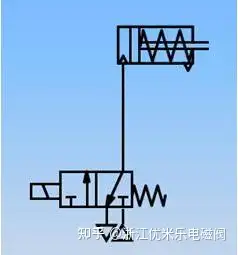
The solenoid valve is energized, the three-way valve changes direction, and the piston rod of the single-acting cylinder stretches forward.
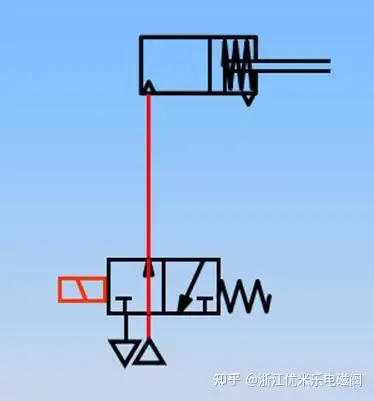
Powered on
The solenoid valve loses power, the three-way valve returns to the initial state, and the piston rod of the single-acting cylinder returns under the action of the spring.
2. Double electric control
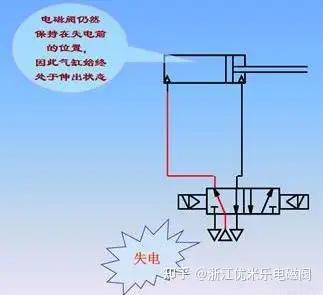
The double solenoid control valve has a memory function, and the cylinder can still maintain the original working state when the solenoid valve is de-energized.
Initial state of double electric control
The solenoid valve remains in the position before the power failure, so the cylinder is always extended.
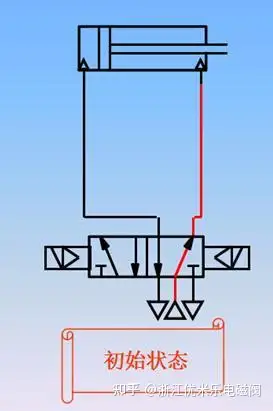
The solenoid valve remains in the position before the power failure, so the cylinder is always extended.