This article introduces various types of burners, as well as the knowledge and working principles of burner systems
Classification of common industrial burners
Burners are the core components of chemical and thermal engineering. According to different performances, there are many classification methods for burners
According to the fuel method: oil burner, gas burner, multi-fuel burner
According to the combustion control method: single-stage fire burner, double-stage fire burner, proportional control burner
Divided by fuel atomization method: mechanical atomization burner and medium atomization burner
According to the structure: integral burner, split burner
According to more detailed classification standards, fuel oil can be further divided into oil burners, heavy oil burners, etc.: fuel burners can be divided into natural gas burners, chemical gas burners, biogas burners, blast furnace gas burners, converter gas burners, yellow phosphorus star gas burners, submerged arc furnace tail gas burners, semi-coke tail gas combustion aggregates, etc.
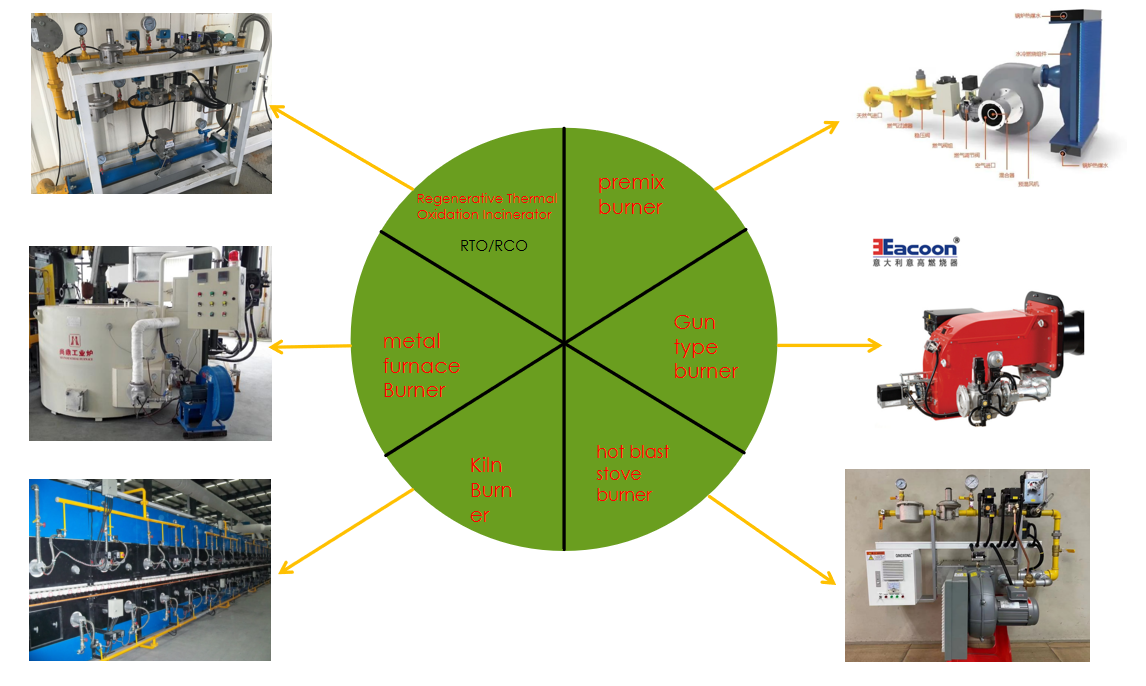
As a mechanical and electrical equipment with a high degree of automation, the burner can be divided into five major systems: air supply system, ignition system, monitoring system, fuel system and electronic control system.


 Working process
1. Check before starting
1. Electrical part: whether the ignition control box power supply is connected;
Whether the closed position is appropriate; whether the contacts of the contactor are in good condition, and the circuit of the electronic ignition switch
Is it connected correctly.
2. Check whether the connection between the combustion chamber and the natural gas pipeline is normal, and connect the pipeline
Whether it is airtight, whether each valve can be opened flexibly.
3. Check whether the natural gas delivered by the natural gas station is in place and whether the pipeline is open
Whether the steam trap is filled with clean water and whether the relief valve is completely released.
2. Ignition operation
1. Pre-blowing. Before the burner is ignited, there must be a period of pre-blowing
Wind, use a blower to blow off or dilute the residual air in the combustion chamber and air duct. During pre-blowing
The time is related to the structure of the combustion chamber and the blowing volume, and is generally set to 15-60 seconds. purge
When opening the combustion chamber into the hole.
2. Connect the natural gas for ignition to the pipe of the electronic ignition device of the burner
In the middle of the road, and adjust the blower damper to a proper position.
3. After the electronic ignition is successfully ignited, open the natural gas input valve, according to
Observed flame color adjusts natural gas input and air input to make natural
The gas is fully combusted, and the heat generated can meet the needs of the production process.
4. After the natural gas is input, if the flameout occurs, the natural gas valve should be closed immediately.
Open the inlet hole of the combustion chamber, blow the natural gas in the combustion chamber with air blast, and then strictly press
The above procedure re-ignites.

